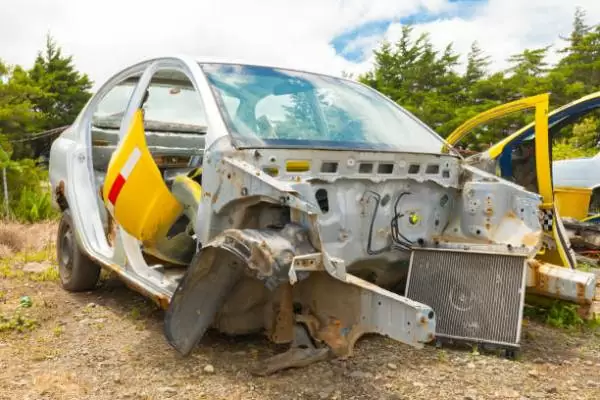
Navigating car accident claims in Alaska requires understanding comparative negligence laws directly impacting compensation for injuries and damages.
Understanding comparative negligence laws is important when navigating car accident claims in Alaska, as these laws directly impact the amount of compensation for injuries and damages.
Comparative negligence distributes fault among all those involved in a car accident. Alaska follows a pure comparative negligence model, where you can still get damages even if you’re 99% at fault, but your compensation is based on your percentage of fault. For instance, if you are awarded $100,000 in damages, but the jury found you 40% at fault, you will only receive $60,000.
A car accident personal injury lawyer will help assess your fault accurately and protect your claim from being unfairly diminished.
Compensation for car accident claims depends on the laws of negligence, which vary greatly across the United States. However, Alaska’s pure comparative negligence gives claimants broader rights to recover damages than contributory negligence, where being even 1% at fault bars recovery. Other states use modified comparative negligence, limiting recovery for those states up to the point of fault, for example, 50% or 51%.
This understanding of these differences shows Alaska’s unique approach that allows for equitable distribution of faults without entirely barring recovery.
If you are under pure comparative negligence, you can only recover compensation if you prove that the other party’s negligence was responsible for the accident. This is especially good for claimants who are at fault. Yet, it takes meticulous evidence collection to make your case successfully in court or at the table in settlement discussions.
However, contributory negligence systems, still used in several states, bar recovery entirely if you are at fault. The harshness of such a rule only underscores the reason that Alaska’s more lenient approach is so important: to allow injured parties to recover damages based on the fault of others involved.
The amount of compensation you can recover is directly affected by fault. In Alaska, courts use evidence like eyewitness accounts, accident reconstruction, and police reports to assign fault percentages. A minor oversight, such as not using a turn signal, can even reduce your recovery if you are partially responsible for the crash.
Alaska courts use the reasonable person’s standard to determine liability and whether actions taken (or not) were reasonable under the circumstances. These determinations are heavily influenced by adherence to traffic laws, road conditions, and witness testimonies. If you share responsibility, the court will use your fault percentage to calculate your damages under AS § 09.17.060.
To successfully navigate a claim, you present strong evidence to keep your assigned percentage as low as possible. Get the police report as soon as possible, document the accident scene with photos, and collect eyewitness contact information. Legal counsel helps you understand what Alaska’s negligence laws mean and avoid common pitfalls that can hurt your compensation.
It is important to know about comparative negligence when considering filing a car accident claim in Alaska. Take a partner with you and an experienced attorney to work through this complicated process and get the compensation you deserve.
Featured Image Source: https://www.istockphoto.com/photo/accidented-car-gm892196230-246972378?searchscope=image%2Cfilm